
 Back
Back
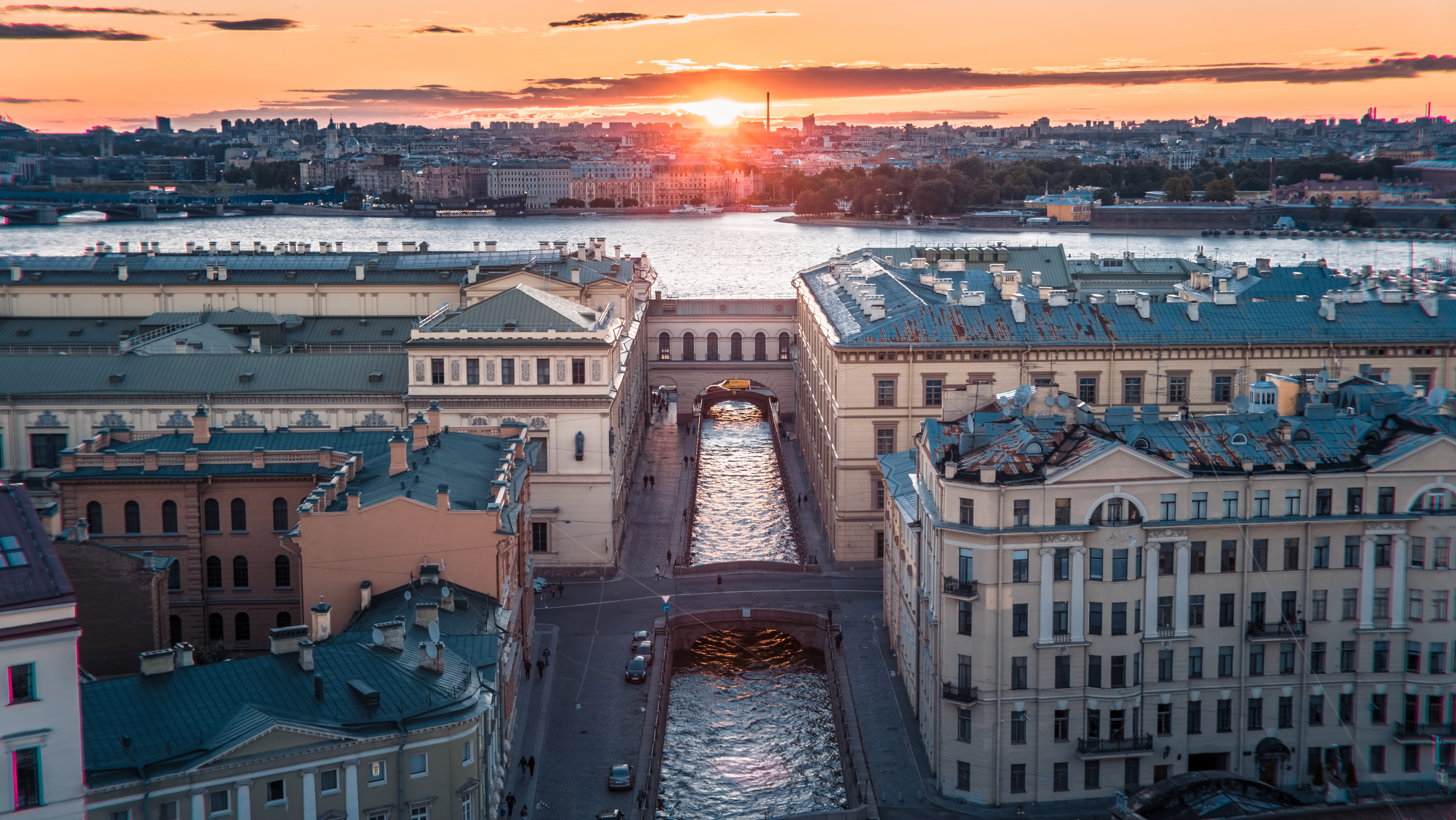
Winter canal

Zimnyaya kanavka
Winter Canal is a man-made canal connecting the Moika and Neva rivers. One of the most recognizable places in St. Petersburg, where the combination of water and excellent architecture forms an unusual landscape.
It was dug in 1718-1719 next to the Winter Palace of Peter I, after which it later received its name. The modern name came into use in the first years of the 19th century. Thanks to this waterway, the sovereign could board a boat literally at the threshold of his home. Immediately after the digging of the Winter Canal, two drawbridges were built across it, currently known as the 1st Winter and Hermitage.
In 1783-1787, a three-story building of the Hermitage Theater was built on the site of Peter's chambers. Opposite this masterpiece of Giacomo Quarenghi, in the same years, the Great Hermitage, the creation of Yuri Felten, was built. At the level of the second floor, two architectural monuments were connected by a passage resting on a powerful stone arch thrown over the canal. When these buildings were completed, their embankments were "dressed" in granite, and along the banks stretched strict cast-iron gratings, designed by the sculptor Johann Duncker.
In addition to the Hermitage buildings, several other architectural monuments face the Winter Canal: the barracks building of the First Battalion of the Life Guards Preobrazhensky Regiment, the State Council archive, and the Arakcheyev house.
The first wooden drawbridges, built according to the Dutch model, were thrown across the canal immediately after its construction. Currently, it is crossed by three bridges: the 1st and 2nd Winter Bridges, as well as the Hermitage Bridge, built in 1763-1766 and the first stone bridge in St. Petersburg.
The canal gained worldwide fame thanks to the composer Pyotr Tchaikovsky, who included in the opera The Queen of Spades an episode with the unfortunate Liza throwing herself into the waters of the Winter Canal.
