
 Back
Back


The Grotto pavilion

Catherine Park | Pushkin
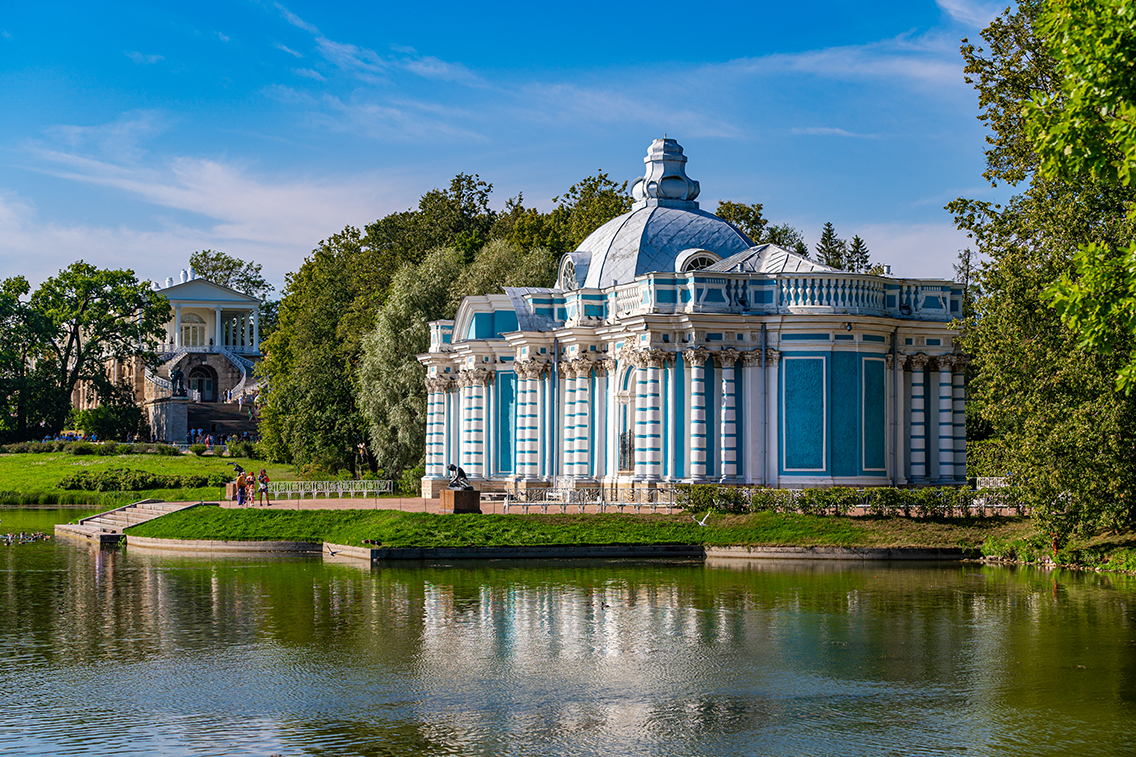
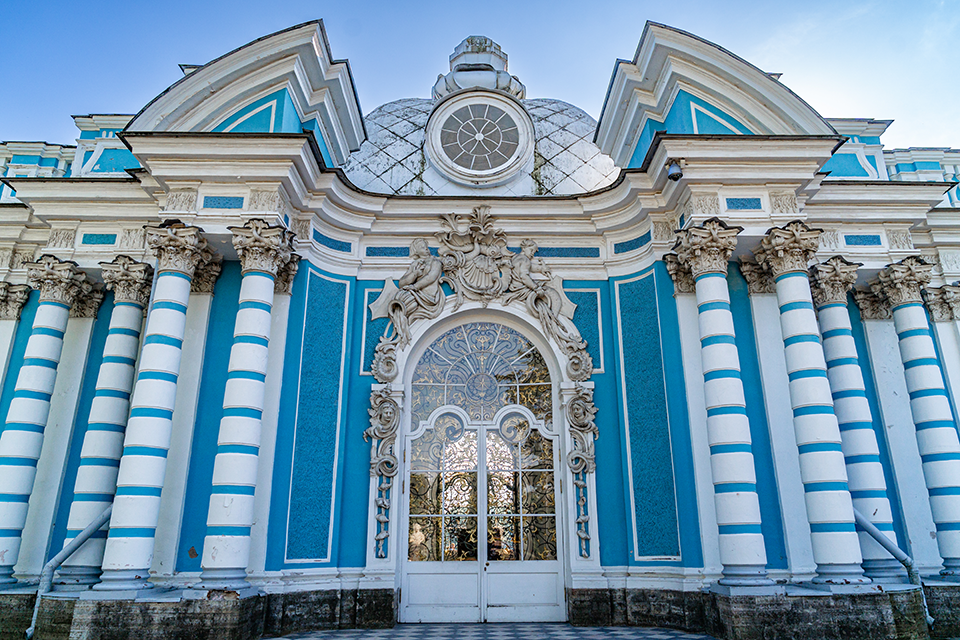
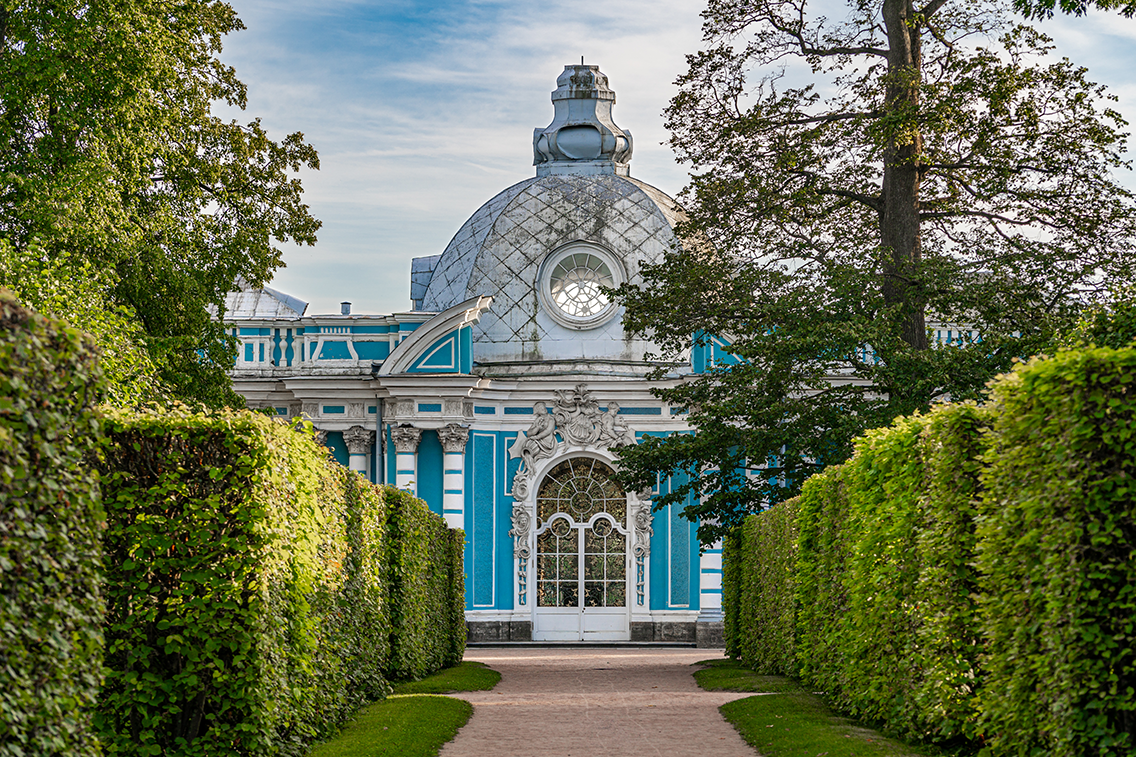
Grottoes, decorated inside with shells and tuff, were almost a mandatory feature of large formal gardens in the XVIII century.
The project for the construction of the Grotto on the shore of the Tsarskoye Selo Big Pond was developed by the architect F. B. Rastrelli. The construction of the building was carried out in 1755-1756, under Empress Elizabeth Petrovna, the interior decoration was completed under Catherine II in the 1770s.
The structure of the interior rounded corners, niches for statues, large semicircular exedras forming projections on the end facades — are characteristic of Baroque architecture. The facades themselves, decorated with complexly grouped columns supporting broken pediments, are distinguished by Baroque splendor and richness. The building was crowned with a pyramidal fountain with streams "flowing" down the edges of the dome; round windows framed lush compositions consisting of figures of putti, dolphins, sea plants and shells. All these decorations, made of wood by Okhta carvers in the mid-XVIII century, have survived and are in the collections of the Tsarskoye Selo Museum-Reserve. Neptune masks in the window locks, capitals with dolphins instead of volutes, and triton figurines emphasize the pavilion's connection with the water element. Rastrelli's design for the interior decoration of the Grotto with sea shells and porous tuff, if it was ever completed, did not last long.
In 1771, a new design for the interior decoration of the pavilion was developed by the architect A. Rinaldi (1709–1794). The light, exquisitely patterned wall decor, made according to his drawings, has survived to this day. In 1782, openwork wrought iron grilles decorated with gilded ornaments made of sheet copper were installed in the windows and doors of the Grotto.
After finishing, in the 1780s, the pavilion was called the Morning Hall. At that time, it housed items made of colored stone and the sculpture collection of Catherine II, the antique part of which was included in the sculpture collection of the Imperial Hermitage, which also included the statue of "Voltaire in an Armchair" by J.-A. Houdon.
The pier located in front of the Grotto was rebuilt in 1830 and 1872. During the Great Patriotic War, it was almost completely destroyed and in 1971-1972 it was rebuilt according to a new design in granite.
Currently, the pavilion is used to host temporary exhibitions.
