
 Back
Back
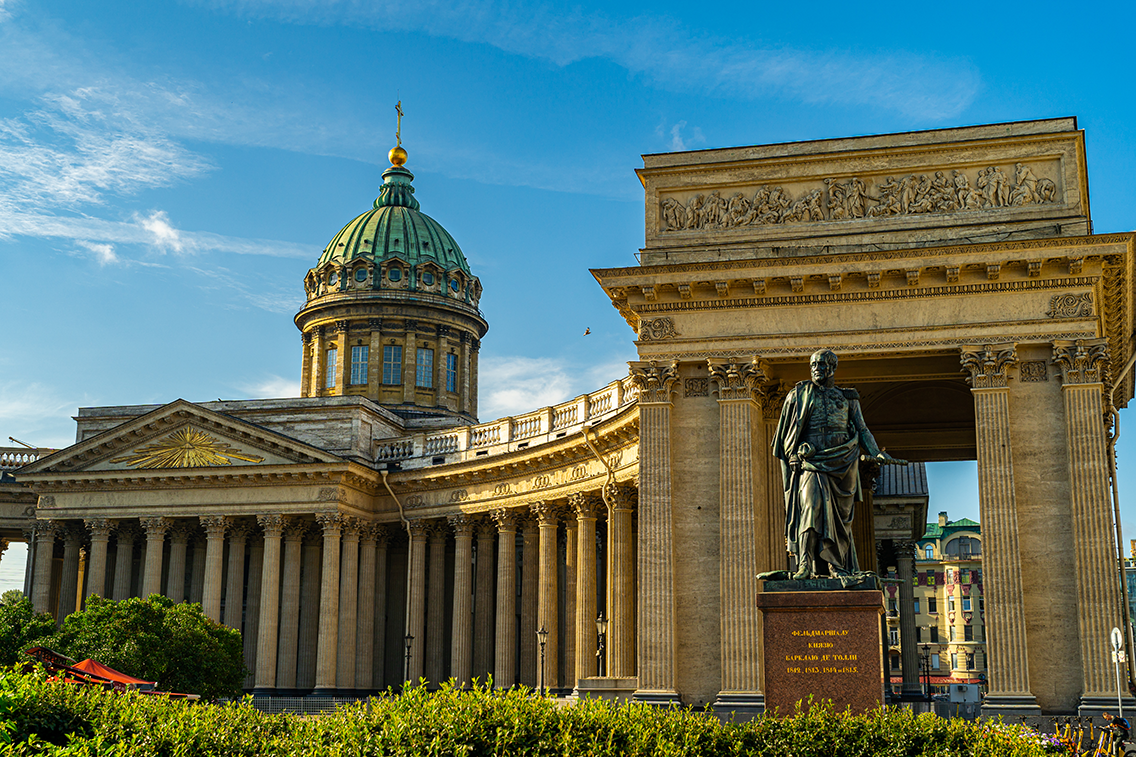
Monument to Barclay de Tolly

Kazantskaya ploschad
Michael Andreas Barclay de Tolly was a Russian Field Marshal and Minister of War during Napoleon's invasion in 1812
During the war, Napoleon was at the height of his power, continental Europe was almost completely conquered by him, and it was Russia's turn - the last obstacle on the path to world domination. Napoleon believed that when Russia collapsed, England - the main stronghold of the anti-Bonapartist forces - would also fall.
Thinking about the near future, Barclay, apparently, also thought about a plan of military action that could be opposed to Napoleon's strategy of conquest. And here, in all likelihood, the idea came to Barclay that if Napoleon attacked Russia, the tactic of luring the enemy deep into the country and destroying his armies with hunger, cold, guerrilla raids and dispersing his forces across the vast expanses of the empire could save the country.
Five years later, Barclay greatly changed and substantially supplemented this plan, but its core essence remained unchanged - to retreat, bleed, exhaust, starve and freeze the enemy army. This plan later received some echoes. However, Napoleon learned of the plan and took decisive action, while Barclay was still recovering in Memel after a serious wound near Eylau, in Tilsit, a hundred miles south of Memel, Alexander and Napoleon signed a peace that greatly changed Russia's foreign policy - from sharply anti-French it became decisively anti-English.
This led to the fact that almost immediately after the signing of the Tilsit Peace, a naval war began between Russia and England, which lasted until the summer of 1812 and ended only with Napoleon's invasion of Russia.
