
 Back
Back

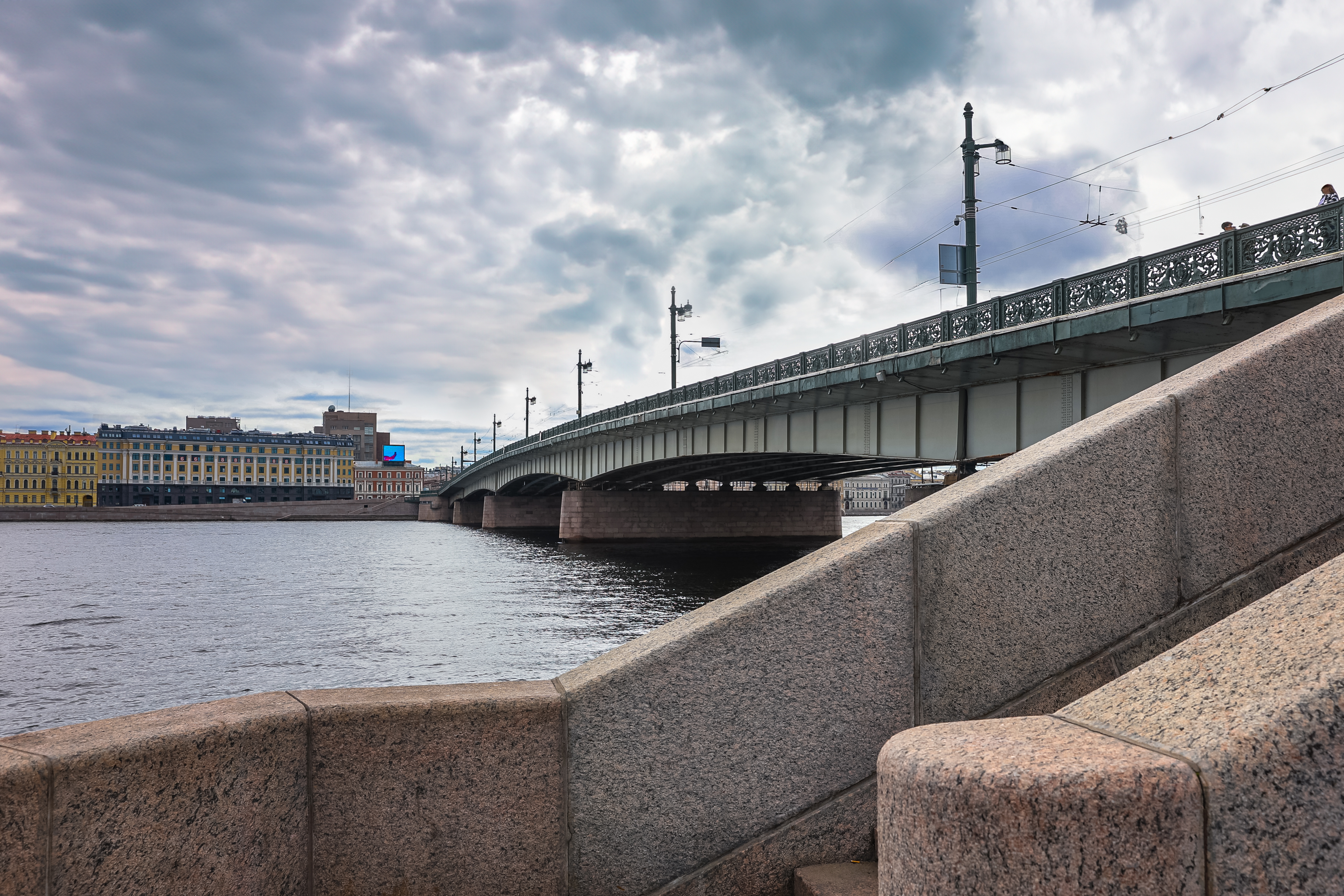

Liteyny Bridge

Liteyny most
The pattern of the Liteiny Bridge's latticework has become one of the symbols of St. Petersburg
The bridge connects the banks of the main channel of the Neva in its deepest part. Liteiny Prospekt starts from Nevsky Prospekt and perpendicular to it, which leads to Liteiny Bridge in a single straight line. Then the road turns into Akademika Lebedeva Street.
The history of the crossing dates back to 1786, when a floating bridge was built in line with Voskresensky Prospekt. Earlier, on the site of today's Liteiny Prospekt, there was an old Novgorod road to Sweden, and long before the founding of St. Petersburg, there was a crossing in this place of the Neva - an ice crossing in winter, a ferry crossing in summer.
The Voskresensky Bridge was moved to the site of today's Liteiny Bridge in 1849. It was then that the St. Petersburg foundry yard was abolished, and a road leading to the Neva embankment was laid through its territory. The floating bridge was badly damaged in the spring of 1865 during the ice drift. At the same time, a decision was made to build a permanent crossing over the Neva.
The construction of the bridge began in 1875, with A.I. Struve as the chief engineer. The use of steel in the construction of the bridge allowed for a significant increase in the length of the spans compared to the cast-iron Nikolaevsky Bridge. The construction of the bridge was marred by two accidents, during which several workers died, but the crossing was opened in 1879, becoming the second permanent bridge across the Neva. The pattern of the Liteiny Bridge gratings became one of the symbols of St. Petersburg. Images of mermaids holding the city's coat of arms over the Neva were cast according to a drawing by K. Rakhau. The length of the bridge is 396 meters, the width is 34 meters. The mass of the metal span structures is 5902 tons. In the area of the bridge, the Neva has its greatest depth - 24 meters.
