
 Back
Back


Museum of Music

Fontanka river emb., 34


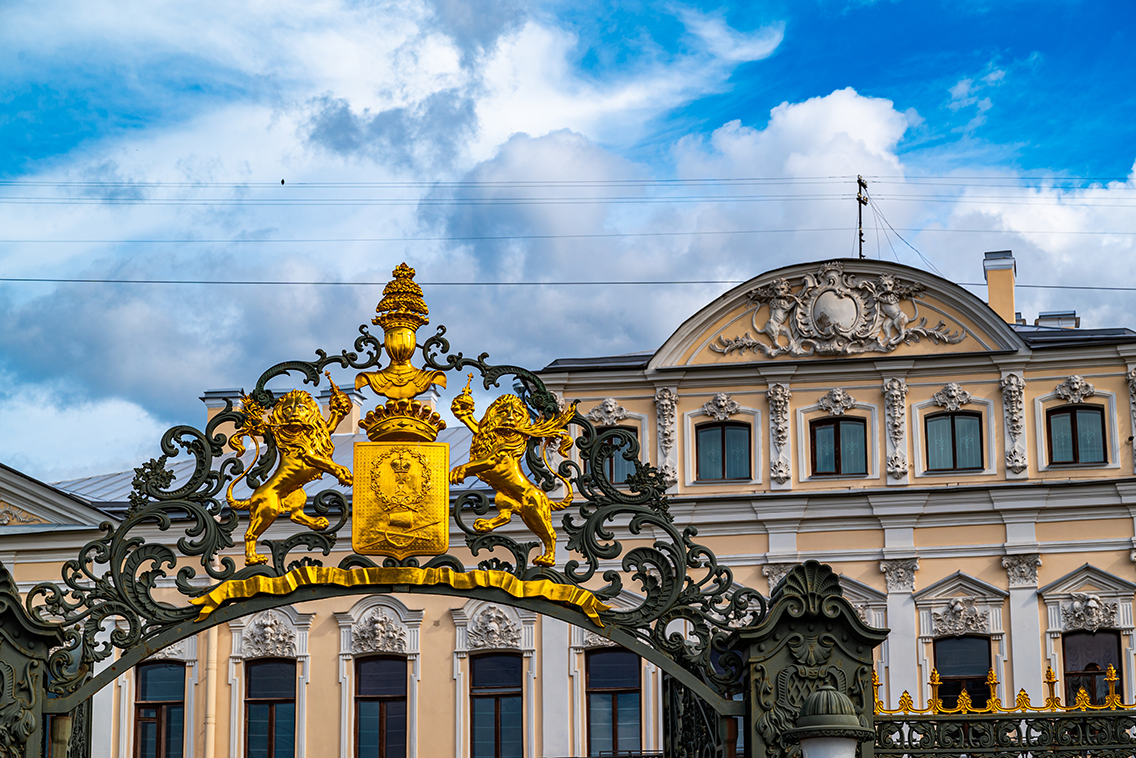
The Fountain House is one of the most interesting sights of St. Petersburg, almost the same age as the city. The name "Fountain House" has been attached to the estate of the Counts Sheremetev since the XVIII century, built on a large plot of land between the Fontanka River embankment and Liteiny Prospekt. The architect of the main estate house was S.I. Chevakinsky.
The most famous architects of different eras participated in the creation of the interiors of the palace and estate buildings over several centuries: F.S. Argunov, I.D. Starov, A.N. Voronikhin, D. Quarenghi, H. Meyer, D. Quadri, I.D. Corsini, N.L. Benois, A.K. Serebryakov and others. Under the Sheremetev Counts, the Fountain House was one of the high society centers of St. Petersburg, a meeting place for outstanding musicians, cultural and scientific figures. The Sheremetev Choir, created to accompany services in the house church of the Fountain House, was well known not only in Russia, but also in Europe. The palace was practically a museum of the history of the Sheremetev family, which played an important role in the Russian state for many centuries.
Since 1990, the Sheremetev Palace has been one of the branches of the St. Petersburg State Museum of Theater and Musical Art. The Museum of Music is being created within the walls of the palace, based on the largest collection of musical instruments from all over the world in Russia. Today, in the halls of the Sheremetev Palace, one can see items from the Sheremetev collections, as well as works of painting and decorative and applied art from the XVIII–XIX centuries that have arrived at the museum over the past quarter century. In April 2022, a new section, “Musical Instruments of the Baroque Era,” was opened in the Sheremetev Palace as part of the museum’s permanent exhibition. The Museum of Theatre and Musical Arts holds a valuable collection of Western European musical instruments from the XVI–XVIII centuries. 150 instruments, the most spectacular and significant, created by famous Baroque masters Amati, Tilke, Otteterre, Tromlitz, and Denner, are presented in the new exhibition.
