
 Back
Back


Grand Menshikov Palace in Oranienbaum

Lomonosov, Dvortsovy pr., 48
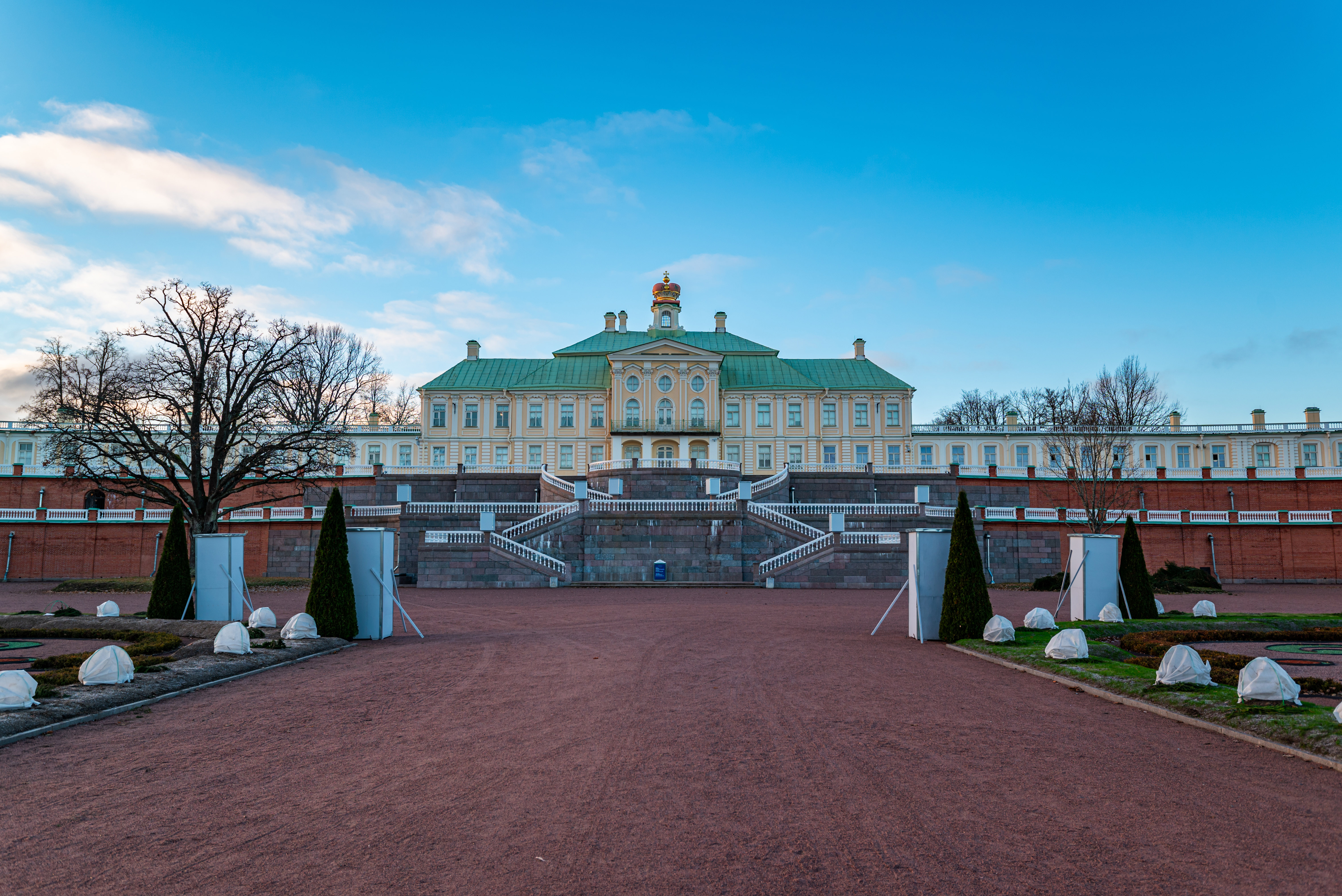
The Grand Menshikov Palace is the oldest building in Oranienbaum. The spirit of the time is clearly felt in the palace and its surroundings – the era of transformation and battling for the access to the Baltic Sea. It is located almost at the water level of the gulf, connected with the sea, directed towards it, as if embodying the main goal of all the endeavors of Peter the Great’s time – the affirmation of Russia on the shores of the liberated sea.
A.D. Menshikov actively participated in the creation of the palace, which was founded in 1711 on his order on the border of a naturally formed hill. The Grand Duke invited foreign architects such as F. Fontana, I.F. Braunstein, I.G. Schädel for the construction of his residence.
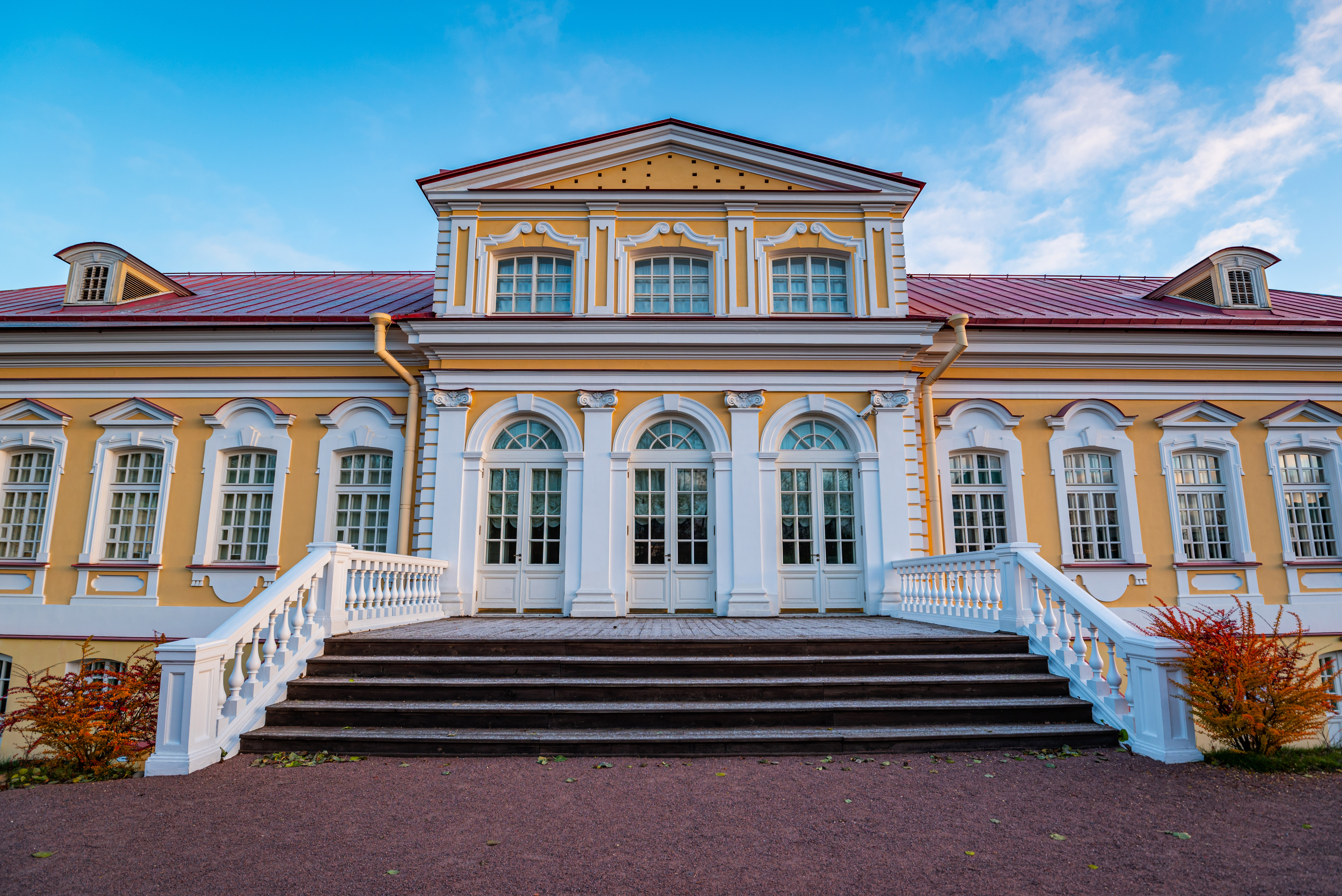
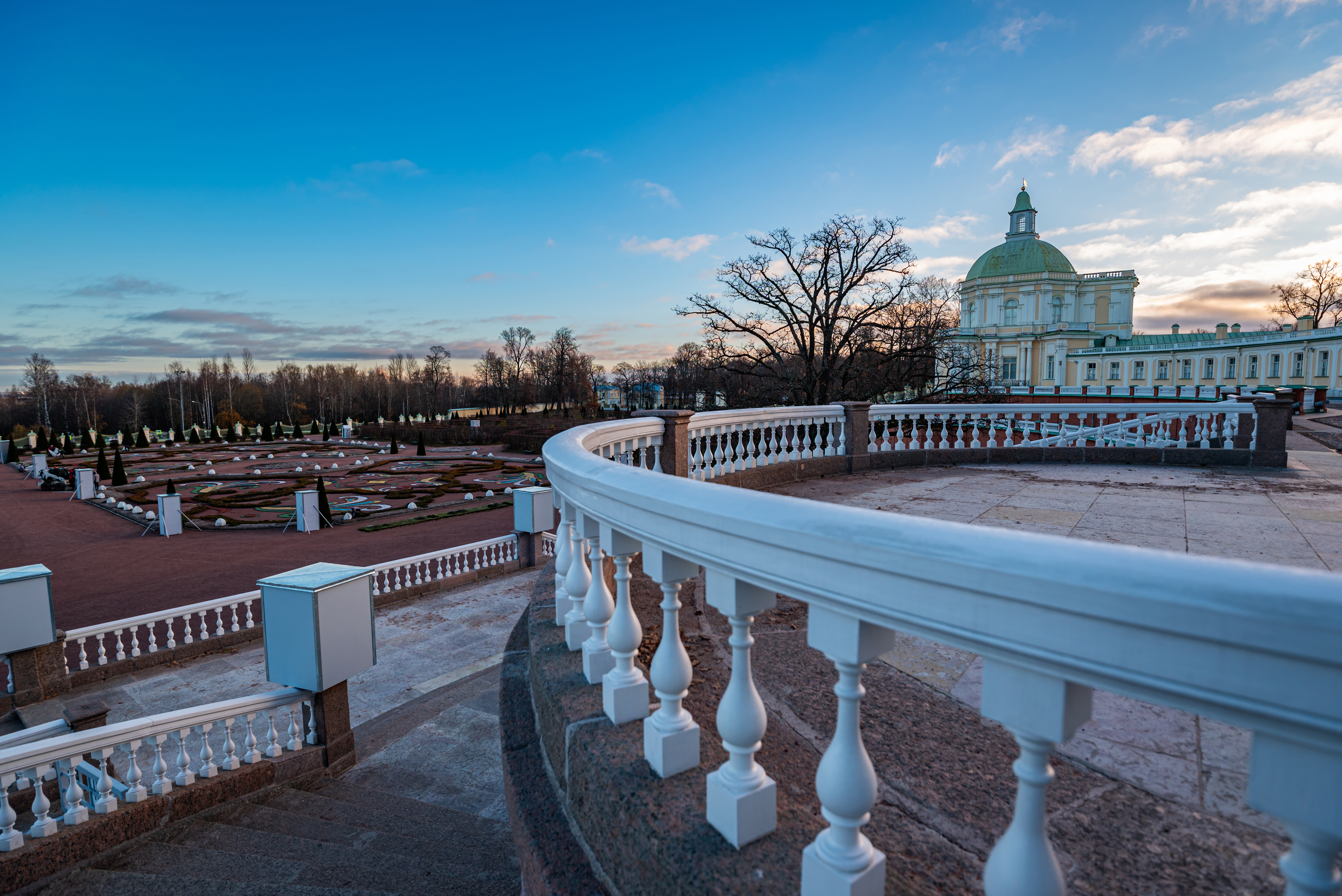
The focal point of the palace is a two-story building decorated with a princely crown, which is adjoined by one-story rounded galleries with two pavilions. At its foot, masters Vitzslav and Graz laid out a regular garden, decorated with sculptures and fountains. Guests arrived at the palace on ships through a sea channel dug in 1719.
The majestic appearance of the palace, its monumental scope and rich interiors aroused admiration and amazement. A lot of “curiosities” awaited the guests in the estate. For example, in the center of the eastern gallery, there was once a “Turkish bath” with a glass ceiling, which was visited by Emperor Peter I himself. The halls and living rooms were decorated with paintings on plaster and canvas, tapestries, marble, even the lead windows were gilded, and the walls of many rooms were covered with Dutch and German tiles. The palace had two special chambers intended for the emperor: a bedroom and a front room. Their decor was comparatively simple, with only the fireplace and walls faced with Dutch tiles.
The unprecedented luxury of the Grand Duke’s country residence surpassed even Peterhof at that time. However, after Menshikov fell out of favor, all his estates were confiscated to the treasury. In 1743, Empress Elizabeth Petrovna granted Oranienbaum to the heir to the Russian throne, Grand Duke Peter Feodorovich, later Emperor Peter III.
In 1918, the palace was transferred to the jurisdiction of the Local Council, and it came under the protection of the Property Committee of the Republic. At different times, the Grand Palace housed a hospital, an agricultural school, a carpenter’s college and its dormitory. In 1934, the building of the palace was given to the Navy – the space of the Church pavilion was divided by intermediate ceilings, and the unique iconostasis of the beginning of the XVIII century was dismantled. Only in 1995 did the transfer of the Grand Palace to the museum-reserve begin. Its doors as a museum opened to visitors in September 2011.
During the three-century history of the Great Menshikov Palace, the times of flourishing were repeatedly followed by periods of oblivion and decline. Nevertheless, the palace escaped catastrophic destruction and radical reconstructions; it has survived to this day as one of the few genuine monuments of Russian architecture of the first half of the XVIII century.
