
 Back
Back


The Chesme Palace

Gastello ul., 15
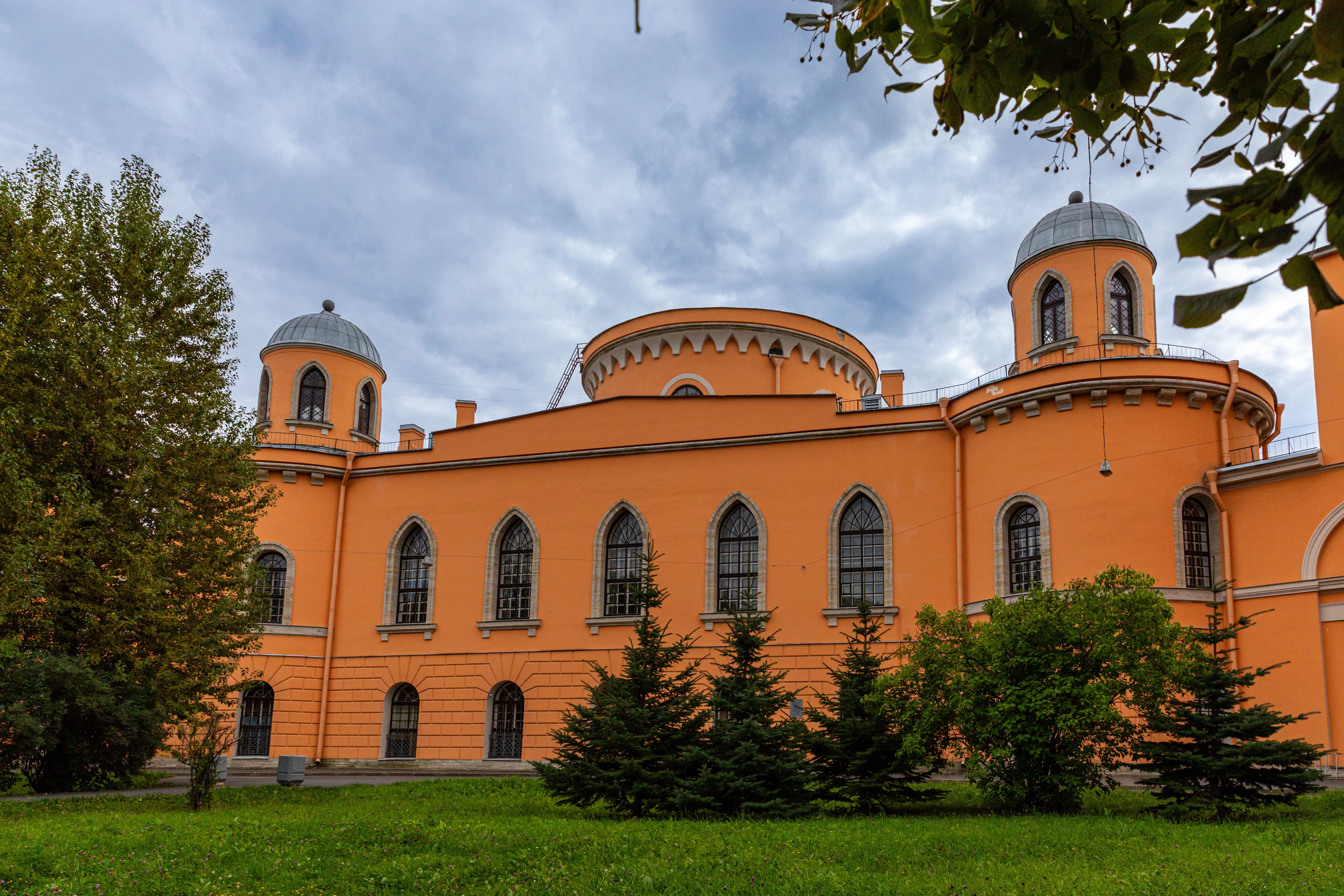
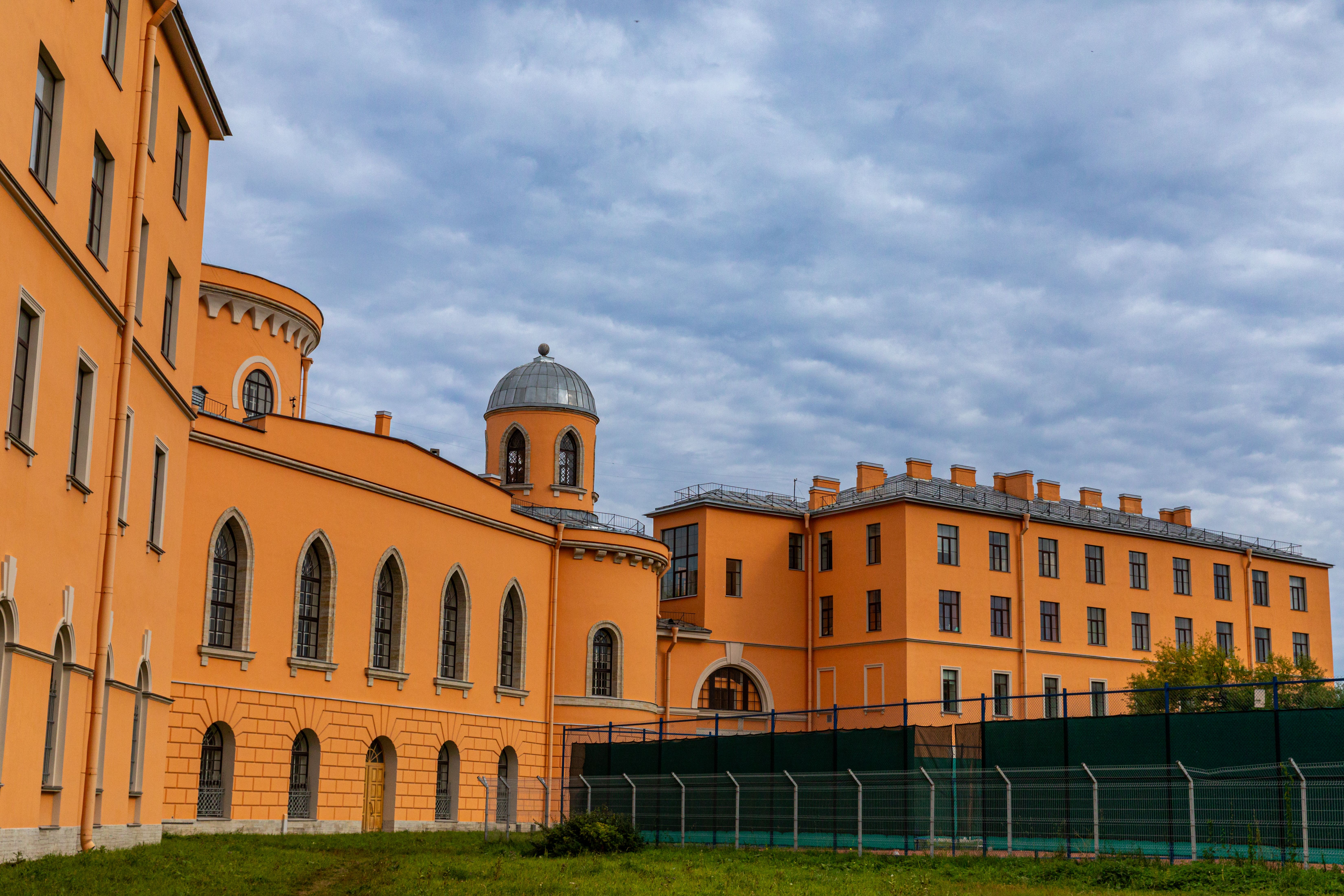

The Chesme Palace is an imperial travel palace built by order of Catherine II
In the XVIII century, the site of the Chesme Palace was a swamp surrounded by dense forest. Finnish peasants called it "kikerikeksen", which means "frog swamp" in Finnish. In 1774, Catherine II ordered the construction of a travel palace for rest on the road from St. Petersburg to Tsarskoye Selo on this site. It was designed in the spirit of a medieval castle (Longford Castle in England, which is similar in plan, is often cited as a specific prototype). The palace on the frog swamp was named Chesme in 1780 in honor of the 10th anniversary of Russia's victory in the Battle of Chesme. Later, Paul I wanted to establish an almshouse with a hospital for crippled soldiers here, but it was not possible to arrange for the delivery of the required amount of water, and the idea was not supported at that time. During the reign of Alexander I, the Chesme Palace was often empty. In 1830, the Chesme Palace came into the possession of the Committee for the Wounded and after six years of adding three two-story wings, privates and officers were housed here. In 1834, a formal park was started around the Chesme Palace. In late spring 1919, the almshouse was closed. The First Forced Labor Camp, known as "Chesmenka", was opened in the Chesme Palace. The former Chesme Palace alternately housed an agricultural colony, the Highway Institute, and the Leningrad Institute of Aviation Instrumentation, until one of the buildings of the St. Petersburg State University of Aerospace Instrumentation (GUAP) moved here in 1941.
The architecture of this relatively small palace is cold and severe. Massive walls and belvedere pavilions above the corner towers are pierced by lancet windows, which stand out in contrast to the smooth plaster of the facades. Belvedere (Italian: "beautiful view") is a tower, an add-on to the roof of a building. The interior decoration of the palace was completely inconsistent with its formidable appearance. The walls were decorated with flower garlands, wreaths, and medallions. A portrait gallery of Russian tsars and grand dukes was created in the central hall, which was supposed to demonstrate the historical continuity of the reign of Catherine II.
The swamp theme of the Chesme Palace was reflected in its symbol - a green frog. It was immortalized with the help of the famous service ordered by Catherine II in England. This service included 952 faience items, the surface of which was decorated with landscape views of old England with the obligatory inclusion of an image of a frog. Today this service is kept in the Hermitage.
